United States
 United Kingdom
 Europe
 Australia
 Canada
 Denmark
 Germany
 Hong Kong
 Japan
 Mexico
 Norway
 Poland
 Saudi Arabia
 Singapore
 Sweden
 Switzerland
 United Arab Emirates
 Qatar


A metal watch band needs regular cleaning because daily wear leaves sweat, skin oils, dust and residue in the links, clasp and adjustment holes. This buildup can make a bracelet look dull, feel less comfortable and retain unwanted odor. A clean stainless-steel bracelet also lets its brushed or polished finish stand out as intended.
Why your metal watch band needs regular cleaning
How often you clean it depends on how you wear it. A watch worn at a desk may only need an occasional wipe-down, while a bracelet exposed to exercise, warm weather, saltwater or sunscreen will collect residue faster. In the watch community, the areas most often missed are the underside of the bracelet, the first links near the case and the inside of the clasp.

Prepare safely before cleaning a stainless steel watch
The safest approach is to use the mildest method that removes the dirt. For a clean metal watch bracelet, prepare a soft microfiber cloth, mild soap, clean water and a very soft brush. A soft toothbrush can work if its bristles are gentle and you use almost no pressure.
Your watch’s water-resistance rating is the manufacturer’s guidance on how much water exposure the watch can handle. Check the instructions for your exact model before allowing water near the watch head, and make sure the crown and any pushers are fully secured. If you cannot confirm that guidance, keep cleaning to a lightly damp cloth and focus on the bracelet rather than rinsing the complete watch.
- Use a soft cloth, mild soap and a soft brush for ordinary dirt
- Avoid steel wool, rough sponges, abrasive pastes and aggressive scrubbing
- Do not use strong household chemicals, solvents, bleach or metal polish
- Treat plated, coated and highly polished bracelets with extra care
- Removing the bracelet is optional, not a requirement for a good clean

Quick clean for everyday buildup
A quick clean is enough when your bracelet has light surface dust, sweat marks or fingerprints but no grime lodged between the links. Start by wiping the outer and inner surfaces with a dry microfiber cloth. If the manufacturer’s guidance allows it, use a cloth that is only lightly damp, then wipe again with a dry section.
Pay particular attention to the clasp, the links closest to the case and the bracelet underside that rests against your wrist. Use the soft brush only in narrow gaps where the cloth cannot reach, working gently rather than forcing the bristles into the bracelet. Finish by drying the band completely before putting the watch away.
This simple habit is especially useful for a daily-worn steel sports watch. It will not replace a deep clean, but it reduces the amount of residue that can settle around moving links over time.
How to clean a metal watch band with a deeper clean
A deeper clean is appropriate when the bracelet still feels grimy after wiping, has visible residue around the clasp or links, or holds onto odor. The key is to work carefully and keep water exposure within the limits set by the watch manufacturer. If you are unsure whether the watch itself can get wet, do not submerge or rinse the complete watch.
1. Check the watch before introducing water. Confirm the water-resistance guidance for your model and ensure the crown is properly secured. If you remove the bracelet, do so only if you are confident with the connection. Many watches use spring bars, which are small bars that hold the bracelet to the case.
2. Mix mild soap with clean water and dampen the soft brush or cloth. The material should be wet enough to lift residue, not dripping. If the bracelet remains attached and the watch is only suitable for limited exposure, keep the wet cleaning away from the case.
3. Clean one section at a time. Brush gently between links, around the clasp, inside the fold-over mechanism and around micro-adjust holes. These are common hiding places for compacted dirt on a bracelet worn every day. Use light strokes on brushed steel so you do not alter the visible texture, and be especially restrained on polished, plated or coated surfaces.
4. Remove soap residue only where the watch’s confirmed water-resistance guidance permits it. Otherwise, use a separate lightly damp cloth. Dry the bracelet with a soft towel, then inspect the end links, clasp joints and connection points for trapped moisture. Let the bracelet air-dry fully before wearing it or reattaching it.
You can wipe the case, crystal and bezel at the same time with a dry or lightly damp cloth, but avoid turning bracelet cleaning into a full watch-head wash. Never force a rotating bezel or work water into gaps around the crown.

When to stop and seek professional help
Stop cleaning and contact a watchmaker if the bracelet has sticky links, visible corrosion, a broken pin, loose end links or a clasp that no longer closes securely. These are mechanical or material-condition issues, not problems that stronger soap or more brushing will solve.
Ultrasonic cleaning can be useful in the right hands, but it is not a universal at-home answer for a complete watch or every bracelet finish. A professional can assess the bracelet’s pins, connections and moving parts before choosing a cleaning method. Careful ownership also means knowing when not to turn a cleaning task into a repair attempt.
Keep your bracelet cleaner between wears
The easiest way to keep a stainless-steel bracelet looking sharp is to wipe it after wear, especially after exercise, saltwater exposure or a warm day. Never store the watch while it is damp, and avoid leaving it in humid places where moisture can linger around the clasp and links.
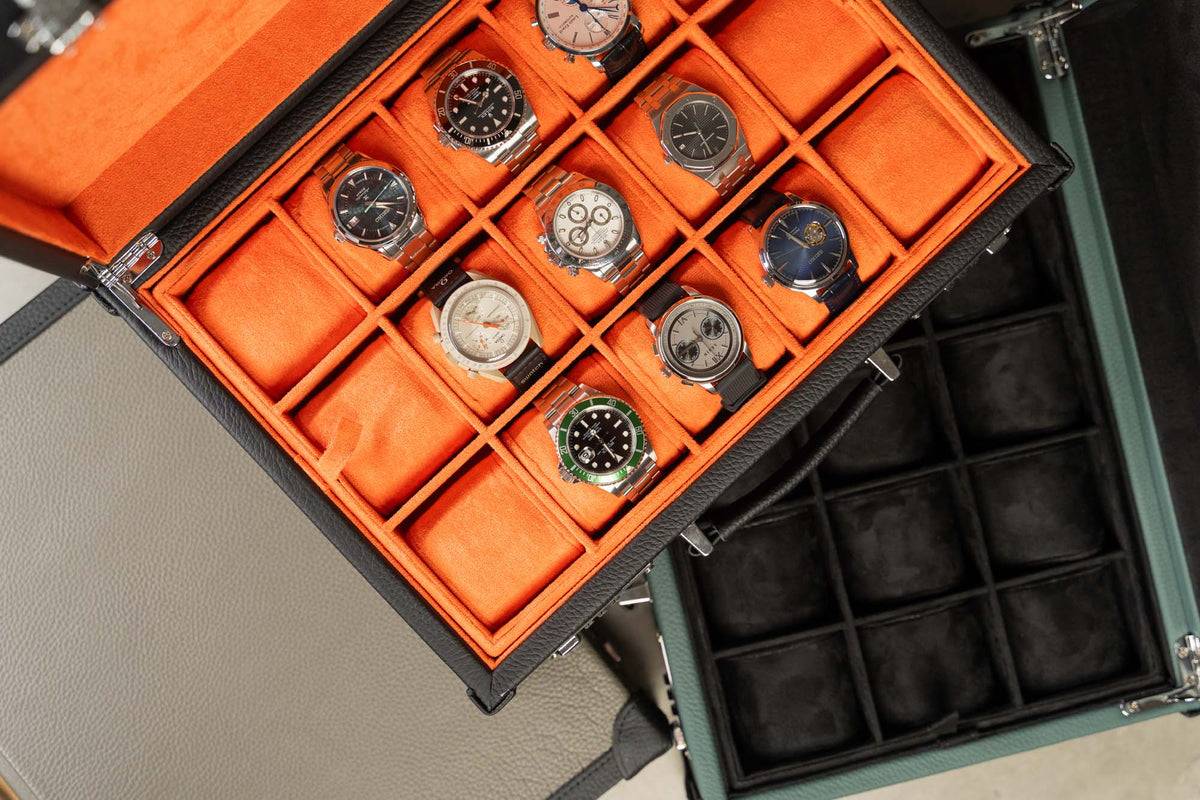
A clean, dry watch box or roll protects a freshly cleaned bracelet from dust and unnecessary contact with other watches. For collectors who rotate their pieces, thoughtful storage also makes it easier to give each watch a quick check before it goes back on the wrist.
Gentle tools, attention to water resistance and thorough drying are all you need to clean a metal watch band safely. Use restraint, enjoy the process and let a professional handle damage or uncertainty.

Explore DailyWatch storage, travel and everyday accessories to give the watches you enjoy wearing a clean, protected place between adventures.